

Development needs power, and sustainable development requires clean energy that can grow with it. Ethiopia is building on its abundant renewable resources while investing in the infrastructure and technical capability needed to power a growing economy.
Ninety-eight per cent of Ethiopia's electricity comes from renewable sources. Of the country's roughly 9,750 megawatts of installed generating capacity, hydropower provides about 94%, with wind, geothermal and waste-to-energy supplying the rest.
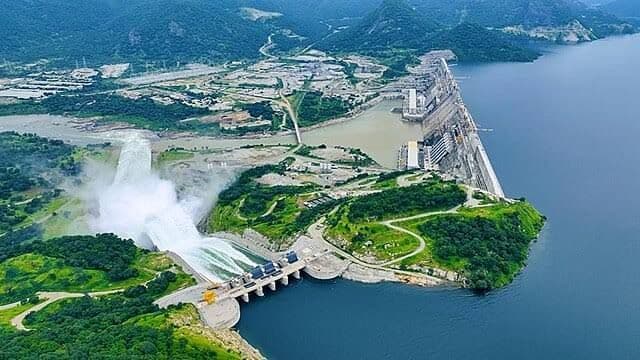
The Grand Ethiopian Renaissance Dam (GERD) is the clearest proof of this ambition. Built on the Abbay River and officially inaugurated in September 2025, it is Africa's largest hydropower project, with an installed capacity of 5,150 megawatts and a reservoir holding some 74 billion cubic metres of water. Its scale reflects Ethiopia's growing ability to deliver complex infrastructure and expand clean electricity for homes, businesses and industry.
Wind is now Ethiopia's second-largest source of power. Five wind farms (Adama I and II, Ashegoda, Assela and Aysha II) provide 504 megawatts. Aysha II, in the Somali Region, was inaugurated in January 2026 and will reach 120 megawatts on completion of its second phase.
Geothermal is the next frontier. The Rift Valley, which runs through Ethiopia, holds more than 26 identified high-temperature geothermal sites, and the country's geothermal potential is estimated at over 1,000 megawatts. Unlike wind and solar, geothermal power runs around the clock, offering a steady complement to hydropower through the dry season.
Solar potential is just as significant. Ethiopia receives an average of 5–7 kilowatt-hours of solar radiation per square metre each day. Grid-scale solar parks are planned in the Afar region, while solar home systems and mini-grids are already bringing power to communities beyond the national grid.
Clean electricity is also opening new possibilities for manufacturing, technology and electric mobility, linking development with climate action and showing how investment in renewable energy can support both economic progress and a more sustainable future.