

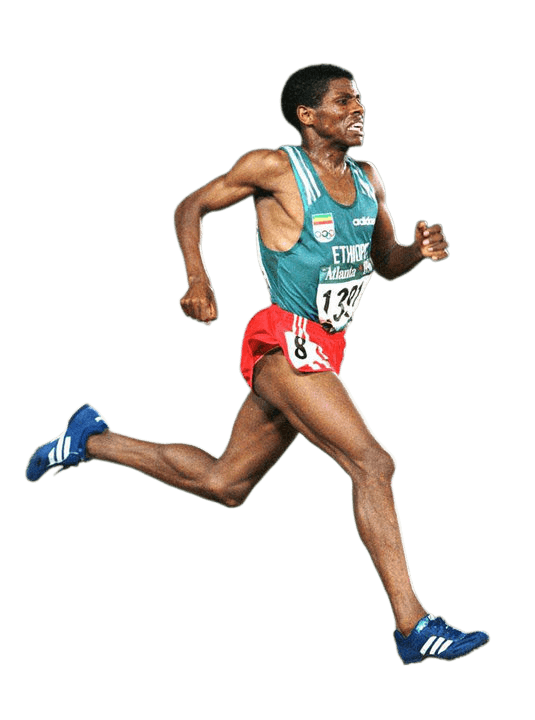
In Ethiopia, distance is part of daily life, and it produces champions.
It began in Rome in 1960, when Abebe Bikila ran the Olympic marathon barefoot and became the first Black African to win Olympic gold. He defended the title in Tokyo four years later.
From highland roads at 2,355 metres and above, some of the greatest runners in history have emerged. Haile Gebrselassie set 27 world records and secured Olympic gold in the 10,000 metres in both 1996 and 2000. Kenenisa Bekele extended that legacy across distances, holding the 5,000m and 10,000m world records for more than a decade each, alongside multiple Olympic titles. Tirunesh Dibaba claimed three Olympic gold medals with decisive control, while Almaz Ayana's world-record 10,000m in Rio took more than fourteen seconds off a mark that had stood since 1993. Tigist Assefa has carried that legacy into the marathon. In 2023 she broke the world record in Berlin with 2:11:53, the first woman under 2:12; in April 2026 she won London in a women-only world record of 2:15:41; and on 27 September 2026 she won Berlin for a third time in 2:11:04, a course record and the third-fastest women's marathon in history, finishing despite a partial tear of her Achilles tendon.
In Bekoji, a small town in the Arsi highlands, world champions have come from the same schools and the same roads. Their success is shared, sustained by coaches, families, and a culture that recognises effort long before medals.
Ethiopian runners compete, and win across the Olympic Games, World Championships, and the Abbott World Marathon Majors. For visitors, this legacy is accessible: altitude training in Addis Ababa, Bekoji, and Sululta; guided runs; and the Great Ethiopian Run, Africa’s largest road race.
The world runs. It started here.