

Culture
The jebena and the market
Half of Ethiopia's coffee never leaves the country. What that means for a nation that invented the crop — and for the price it can command abroad.
7 min readHanna Bekele
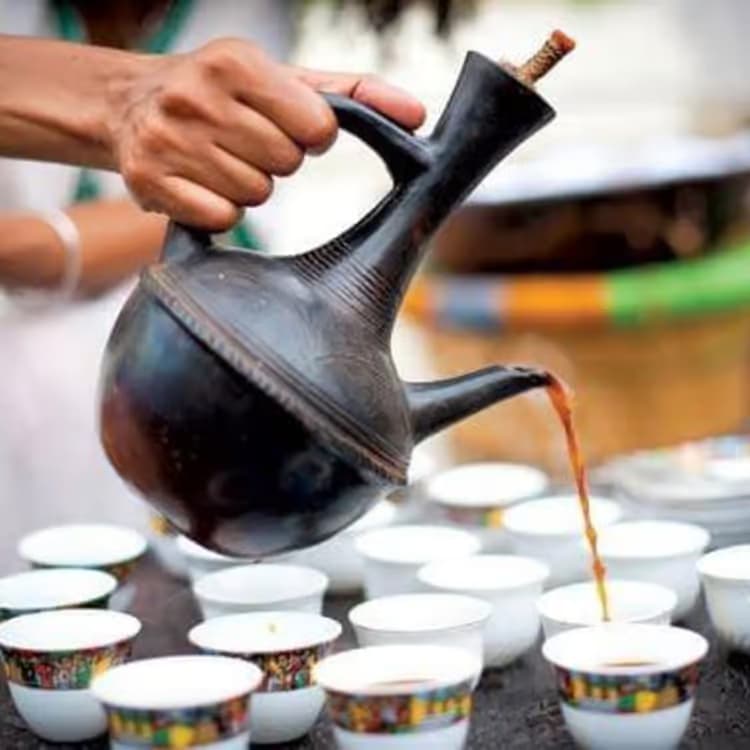
In most coffee-producing countries the crop is an export and little else. Ethiopia is the exception: roughly half of what it grows is drunk at home, in kitchens, offices and roadside stalls, brewed in a clay jebena over charcoal.
That domestic appetite is usually described as charming. It is better understood as leverage. A producing country with a deep internal market is not obliged to accept whatever the export price happens to be in a given season.
Three rounds, on purpose
The ceremony has a structure. Green beans are washed and roasted in the room so the smoke reaches everyone present. They are ground by hand, brewed, and poured three times — abol, tona, baraka. Leaving before the third round is a small rudeness.
You cannot rush buna. That is the point of it.
Almaz Tesfaye, Yirgacheffe
From sack to name
For decades Ethiopian coffee left the country anonymously, blended into products named after roasters rather than farms. The trademarking of origin names — Yirgacheffe, Sidama, Harar — was an argument about who owns the value in a cup.
- Yirgacheffe — floral, citric, washed at altitude in Gedeo
- Guji — dense stone fruit from the Oromia highlands
- Sidama — balanced and berry-forward
- Harar — dry-processed, wine-like, from the eastern escarpment
- Limu — round and gently spiced
The next argument is about roasting. Green beans exported and roasted elsewhere leave most of the margin abroad. Ethiopian roasters are beginning to take that step, and it is the single largest available gain in the value chain.