
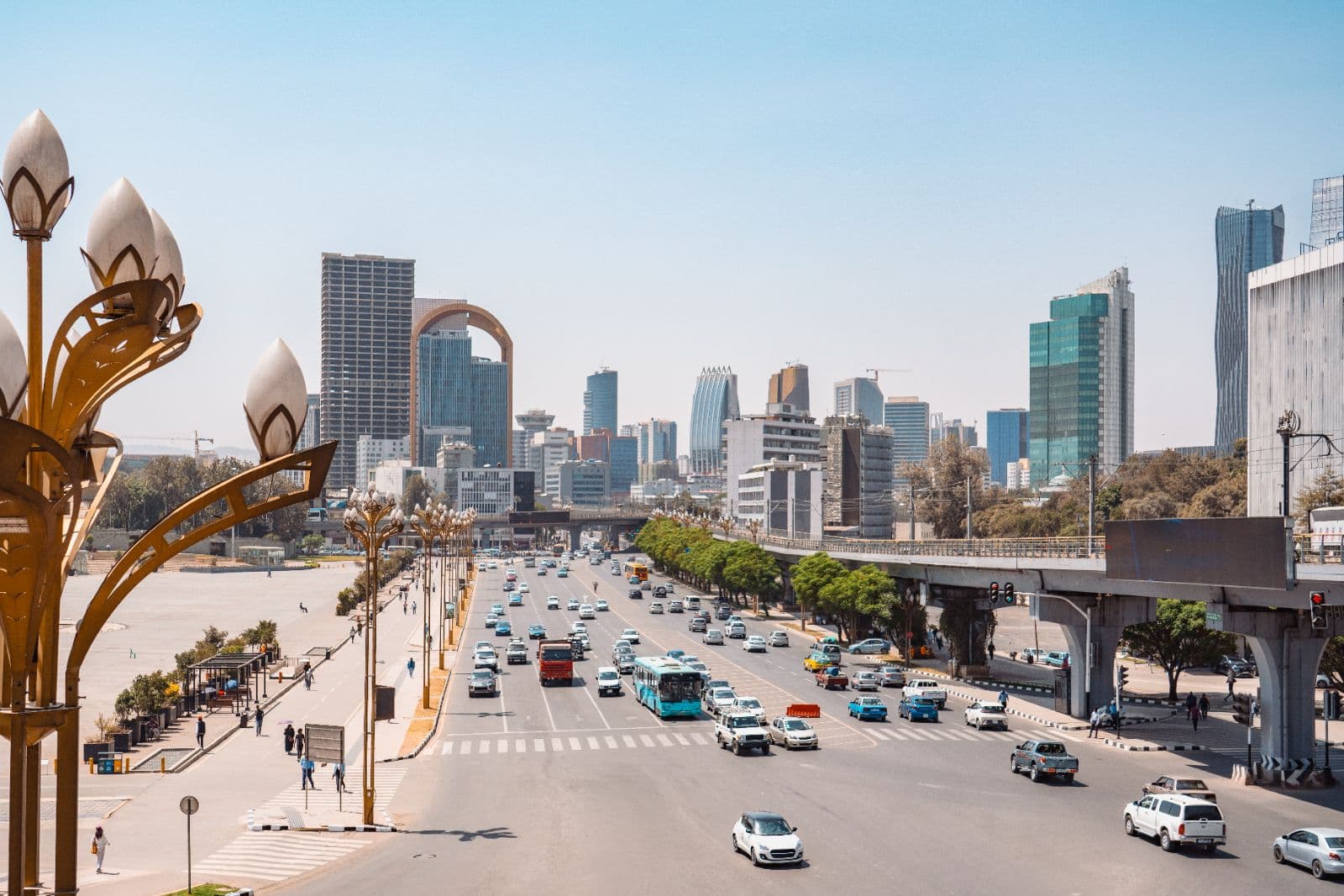
Addis Ababa, Africa’s highest capital at roughly 2,355 metres and home to more than five million people, is being transformed to meet the demands of a growing city and an evolving continent. Across the city, new infrastructure is creating better connections between roads, public spaces, businesses and neighborhoods, with greater attention to how people move through and experience the city.
Corridor development has introduced wider pedestrian walkways, dedicated bicycle lanes, greener public spaces, recreational areas and upgraded roads across the capital.
The transformation also extends to the systems that support a modern city. Digital infrastructure is being integrated into the urban environment, while the Smart Police Station is bringing technology into public safety and service delivery.
The renewal reaches into everyday life as well. Prime Ministerial initiatives such as ‘Dine for Sheger’ are creating new spaces for recreation and comfort, while the Addis Mesob one-stop service is making government services more accessible through integrated digital service centres. Alongside smart infrastructure and technology-enabled public services, these changes are helping shape a capital that is modern not only in appearance, but in how it serves its people.
Addis Ababa is renewing its urban identity, creating a capital that reflects both its history and its place in Africa’s future.